The Golden Temperature Zone for Heating Breast Milk Revealed: How Important is the Temperature Control Precision of a Bottle Warmer?

Bottle Warmer The temperature of breast milk, though seemingly only a few degrees, can determine whether the nutrients are absorbed by the baby or are quietly lost during heating. Many parents believe that breast milk is fine as long as it’s not cold, but from a scientific perspective, 37°C is not an arbitrary number but a nutritional “watershed.”
I. A few degrees of temperature difference can change the fate of nutrients.
Breast milk is a vibrant, living liquid system. Its whey proteins, immunoglobulins, lactoferrin, and other components act like precision instruments, functioning only properly at near-body temperature. Once the temperature exceeds 45°C, some proteins begin to denature, reducing their immune activity.
This may not be immediately noticeable to parents, but in the long run, it affects the baby’s immune protection and fat absorption efficiency.
In other words, “properly heating” breast milk isn’t for better taste, but to keep those unseen molecules alive.

II. Why is 37°C called the “golden temperature zone”?
37°C is a comfortable temperature for the human body and also the temperature a baby is most familiar with in the womb. This temperature not only maximizes the acceptance of breast milk by the oral mucosa but also maintains the activity of breast milk enzymes, ensuring optimal fat breakdown and absorption
. More subtly, this temperature range has psychological significance. Many new parents find that breast milk at the perfect temperature helps their babies calm down more quickly. That “familiar warmth” provides a sense of physiological security and also a subconscious connection.
III. Does the technology of temperature control truly understand breast milk?
Many bottle warmers on the market tout “constant temperature” and “intelligent temperature control,” but the real challenge isn’t “fast heating,” but rather “not overheating.” Breast milk, unlike formula, has an extremely narrow temperature tolerance.
Some devices, after reaching the set temperature, will continue to heat up a few degrees due to residual heat, while high-precision models can maintain a stable ±1°C temperature during constant temperature cycling.
This 1°C, seemingly insignificant, represents a huge gap in the world of breast milk.
Therefore, when we discuss whether a heater is “good” or “bad,” we are actually discussing whether it understands the physiological logic of breast milk, rather than simply making the liquid hot.
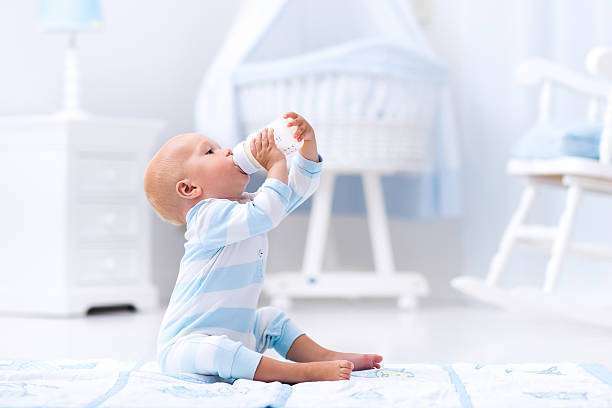
Fourth, what parents really need to do is not “control the temperature” but “guard the temperature.”
Scientific breast milk heating is more like a care philosophy. It’s not about pursuing perfect machine settings but about understanding the meaning behind the temperature.
In actual feeding, parents can remember two simple principles:
Breast milk doesn’t need to be “warmed up quickly,” but rather “warmed gently.”
Breast milk does not need to be kept warm for a long time, because both nutrition and time are precious.
Each heating process is actually an action to “protect the activity of nutrients.” Rather than pursuing speed, it’s better to pursue stability and gentleness.
V. Temperature: A Bridge Connecting Technology and Maternal Love
When a bottle of breast milk is gently placed into a bottle warmer, it’s more than just liquid; it’s a condensation of time, effort, and emotion. Precise temperature control is the most delicate thing technology can do for maternal love. Those seemingly cold numbers are actually protecting the baby’s initial immune system for parents.
The ideal temperature range for heating breast milk is not just about the precise 37°C, but about understanding that maternal love itself deserves to be treated scientifically and seriously.