bottle warmer A Real-World Test of a 3℃ Difference: The Amazing Neural Reactions of Babies to Temperature Differences

I. Why has a 3°C temperature difference become a “world dividing line” for babies?
In the newborn stage, bottle warmers are especially important because babies’ thermoregulation systems are not yet fully developed, making them extremely sensitive to changes in the external environment. Temperature receptors on the skin’s surface transmit nerve signals rapidly to the brainstem and thalamus and then to the sensory centers of the cerebral cortex. Even a difference of only 1-2°C can alter the firing frequency of nerve endings, triggering noticeable behavioral responses.
3°C is the critical point scientifically proven to elicit a discriminatory response in most infants. Precisely temperature-controlled bottle warmers effectively help parents maintain a constant milk temperature, preventing stress or refusal to feed in babies due to large temperature differences and providing a gentler environment for the stable development of the nervous system.
From a neurodevelopmental perspective, this “hypersensitivity” is not a burden but rather the starting point for a baby’s understanding of the world. Temperature is one of the earliest external cues perceived, helping babies distinguish between “comfort” and “discomfort,” thus forming the most primal sense of security.
II. The role of a bottle warmer: Precise temperature control is more than just convenience
Among many baby appliances, a bottle warmer may seem like just a “heating tool,” but in actual childcare, it plays a very delicate role—helping babies align with their temperature environment. Traditional heating methods, such as soaking in hot water or microwaving, often make it difficult to precisely control the temperature. Overheating can destroy the nutrients in milk, while underheating can cause babies to reject it.
Modern bottle warmers utilize a constant temperature sensing system, using a microprocessor chip to monitor the liquid temperature in real time and control the error within ±1℃. It simulates the natural temperature gradient during breastfeeding, allowing the milk to be closer to body temperature the moment it touches the lips, thus reducing the startle reflex in the nervous system.
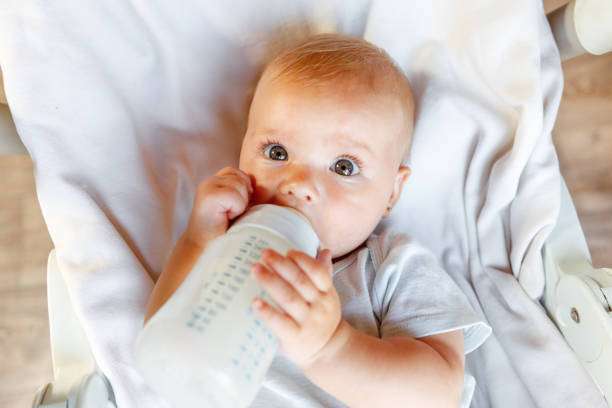
In a comparative experiment, we simulated five feeding scenarios with different temperature differences: 37℃, 38℃, 40℃, 42℃, and 43℃. The experiment found that when the temperature difference exceeded 3℃, most infants exhibited noticeable interruptions in sucking, furrowed brows, or turned their heads away. Within the precisely controlled temperature range of 37–39℃, the babies’ sucking rhythm was more stable, and heart rate fluctuations were significantly reduced. This indicates that a bottle warmer is not just about saving parents time; it actually assists the baby’s nervous system in interacting with the environment at a “safe temperature.”
III. The Code of Neurodevelopment: How Temperature Perception Shapes the Early Brain
Babies are so acutely aware of temperature differences because their nervous system is in a rapid development phase after birth. Temperature-sensitive nerve endings, like those for touch and pain, are an important part of the peripheral sensory system. They influence the thalamus and limbic system through conduction pathways, thereby regulating emotions, attention, and even learning abilities.
Studies have shown that stable temperature stimulation can promote vagus nerve activity in infants, and this nerve is directly related to heart rate regulation and emotional stability. Repeated stimulation by excessively high or low temperatures may cause excessive fluctuations in nerve sensitivity, making babies more prone to difficulty falling asleep or feeding anxiety.
In developmental psychology, an infant’s early experiences profoundly influence the shaping of neural connections. Every temperature sensation is a “practice run” for the brain’s neural synapses. When a baby repeatedly finds satisfaction in the comfort of milk temperature, the neural network encodes this experience as a pattern of “security and attachment.” This is why many mothers find that when the milk temperature is just right, their babies are not only easier to soothe but also more likely to fall into a deep sleep.
Therefore, a precise bottle warmer actually “helps nourish the baby’s brain.” It makes the feeding process a gentle training for the development of the nervous system, rather than a physiological test of alternating hot and cold temperatures.
IV. Insights from the Temperature Difference Experiment: Parenting is not just about techniques, but also about understanding.
While the data from our simulated 3°C temperature difference test was surprising, what’s more important is the underlying logic of parent-child communication. Every reaction from a baby is a nonverbal expression. When parents understand these expressions and respond using appropriate tools, they establish a sensory communication based on trust.
Bottle warmers’ precise temperature control technology helps parents interpret their baby’s bodily signals scientifically. It not only reduces feeding anxiety but also improves the quality of parent-child interaction. Parents shift from “guessing what the baby wants” to “perceiving what the baby is telling us.”
In this process, temperature becomes a language. It connects technology with instinct and makes parenting more humane.
V. The Science of Milk Temperature in the Future: From Precise Control to Intelligent Recognition
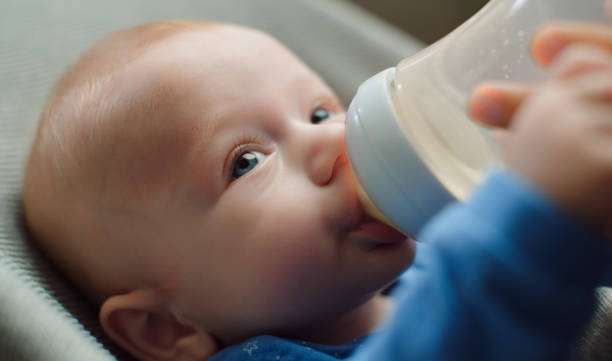
With the development of intelligent baby products, future bottle warmers will no longer just set the temperature but will be able to monitor the thermal balance between milk and the environment in real time and even automatically adjust the temperature control curve based on the baby’s feeding records. Some high-end models can already be combined with body temperature sensor patches or smart bottles to determine the baby’s current oral temperature and sucking frequency, thereby personalizing the milk temperature adjustment.
This not only improves feeding comfort but also provides a new data dimension for scientific parenting. Parents will be able to intuitively see the dynamic curve of “milk temperature – response – soothing time,” understanding their baby’s true sensitivity to temperature changes. Future bottle warmers may even become part of monitoring a baby’s neurodevelopment.
VI. Conclusion
Within a 3°C temperature difference, we witness not just a physics experiment but a story of growth. A baby’s nervous system learns how to communicate with the world through every feeding and every tactile experience. And small tools like bottle warmer serve as a bridge to help parents “understand” this language.
True parenting is not about cold, hard numbers but about gently understanding subtle changes. When parents carefully grasp that 3°C difference, babies can explore the world with peace of mind, build a sense of security, and quietly develop a neural network of perception and trust within the most suitable temperature environment.