The continued popularity of bottle warmers has revealed 3 signs that parenting skills are being weakened.

Over the past decade, bottle warmers have evolved from optional small appliances in the mother and baby market to “standard equipment” for new families, and even become a necessity on some parenting lists. With changing attitudes towards childbearing, faster-paced lifestyles for parents, and the increasing integration of technology into parent-child interaction, bottle warmers have gained widespread recognition for their constant temperature, speed, and safety. Many new parents believe that they save time, prevent mistakes, and reduce anxiety, representing an important symbol of improved modern parenting conditions. However, as these devices have permeated family life, a previously overlooked trend has gradually emerged: a decline in certain parental feeding skills.
This is not a denial of technological products, nor is it an attempt to negate the convenience brought by bottle warmers . Rather, it seeks to delve into the issue from the perspectives of family behavior, parental skill structure, and the psychological mechanisms of reliance on technology. As more and more families adopt bottle warmers as part of their standard feeding routine, some parenting skills that should develop naturally are quietly weakening. Advances in parenting equipment do not equate to improved parenting abilities; in some cases, over-reliance on equipment may even lead to a decline in parenting skills.
This article will delve into this skill-loss process through three key indicators to help parents better understand the repercussions of technology’s involvement in family parenting. The article’s focus is not on encouraging the abandonment of bottle warmer but rather on emphasizing a renewed understanding of the relationship between “tools” and “abilities,” allowing technology to serve as a supportive tool in parenting rather than a replacement.

1. Decline in the ability to judge temperature: Parents are increasingly relying on digital temperature control rather than their own judgment.
The most obvious sign of skill deterioration after the widespread use of bottle warmers is the decline in parents’ ability to judge milk temperature. In the past, before bottle warmers , parents had to judge the milk temperature by touch. They would drop a drop of milk on the inside of their wrist and judge whether it was suitable for feeding by the subtle temperature sensation on their skin. This judgment process required not only experience but also a certain amount of patience and sensitivity.
Today, with constant temperature settings becoming one of the most relied-upon features, many parents almost completely stop judging the temperature during feeding, relying entirely on the heating curve calculated by the device. Digital displays, temperature control programs, and heating levels have replaced human perception, causing parents to gradually lose their sensitivity to temperature changes after prolonged use. Some new parents even become completely afraid to judge the milk temperature; if the device deviates even slightly, they become panicked. This psychological dependence is particularly pronounced during nighttime feedings, as parents, in a state of exhaustion, tend to trust the device more than their own feelings.
This trend manifests not only as skill decline but also as a shift in the structure of psychological security. Parents are increasingly relying on devices for safety judgments, and some families even experience significant anxiety when out without a bottle warmer . They no longer dare to use hot water to warm the milk, nor do they dare to use their palms to check the milk temperature, and may even delay feeding due to the lack of such equipment. With weakened judgment, parents’ flexibility in childcare decreases significantly, and their ability to adapt to environmental changes weakens accordingly.
In the long run, this decline in temperature judgment skills may become more pronounced with a second child or in unexpected situations. When the bottle warmer becomes the sole source of reliance, any equipment malfunction, travel inconvenience, or operational error can throw parents into chaos, while their own coping abilities gradually weaken. Therefore, the decline in temperature judgment skills is not only a loss of feeding techniques, but also a decrease in parenting adaptability due to over-reliance on the bottle warmer .

2. Disruption of feeding rhythm: Device settings replace natural observation of the baby’s needs.
bottle warmers is the decline in feeding rhythm. Parenting rhythm refers to parents adjusting feeding times by observing their baby’s cries, facial expressions, sucking rhythm, and feeding responses, rather than relying on fixed feeding schedules or equipment settings. In the past, parents gradually developed an internal feeding rhythm by observing changes in their baby’s needs, making them acutely aware of their child’s hunger levels, stomach capacity, and changes in their routines.
Now that bottle warmers have become part of the default routine, many parents are starting to schedule feedings around the device’s heating time, temperature control time, and timer function. They tend to prioritize the device’s preparation process rather than adjusting in real time according to the baby’s needs. Some families even feed according to the device’s keep-warm time, for example, 40 minutes, believing that the baby should drink within that time rather than letting the baby decide freely based on their natural rhythm.
One clear consequence of this dependency is a gradual decline in parents’ ability to observe subtle changes in their baby’s needs. A baby’s hunger cues differ at different stages, ranging from fidgeting to finger sucking to soft vocalizations; these signals typically play a crucial role in establishing a feeding rhythm. However, when parents focus more on device prompts than on the baby’s behavior, their feeding sensitivity decreases, sometimes leading to misinterpreting cries as hunger or ignoring subtle hunger cues.
This trend not only impairs parents’ judgment but also disrupts the baby’s feeding rhythm. In a bottle warmer- dominated rhythm, babies may drink too quickly, too late, or too early, and parents cannot adjust instinctively. Over time, this disrupts the baby’s sleep-wake cycle, and parents tend to blame the child rather than the imbalance in feeding rhythm control.
The weakening of the feeding rhythm is not only a decline in skills, but also a passive replacement of key aspects of parent-child interaction. When parents no longer establish a connection with their infants through observation, response, and adjustment, the parenting process gradually becomes mechanical and procedural, losing the original interactive warmth.
Third, decreased ability to cope with emergencies: Bottle warmers cause parents to overlook the necessity of backup plans.
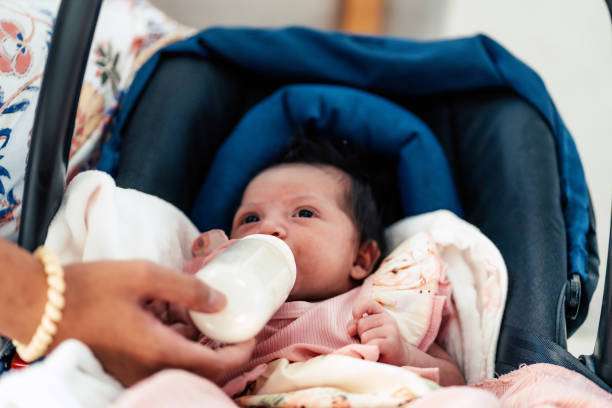
The third sign of skill decline is a decrease in parents’ ability to cope with unexpected feeding situations. In traditional parenting, parents need to master various heating methods, such as soaking in warm water, testing with their palms, and temporarily heating food using limited resources in an out-of-home environment. Parents accumulate these skills through daily experience, enabling them to keep the feeding process running smoothly even without a bottle warmer .
However, with the widespread adoption of bottle warmers , many families have gradually become accustomed to relying solely on the device’s thermostat. This has led to a lack of flexibility in responding to unexpected situations. For example, there might be situations like not being able to find a power outlet while traveling, the device suddenly malfunctioning, an alarm going off during nighttime use, or even needing to feed a baby unexpectedly but not having enough water to heat. These situations should be easily resolved with backup skills, but many modern parents, lacking training, feel helpless and anxious.
The decline in coping abilities reflects the phenomenon of “skills outsourcing” in the modern parenting system. Devices have conditioned parents to rely on pre-set procedures without thinking about the process. Parents no longer proactively learn, respond, or make judgments, but instead depend on the preset answers provided by the bottle warmer . This phenomenon, if left unchecked, can lead to parents gradually losing their adaptability to changing environments. When an infant’s needs suddenly change—for example, drinking more than usual, refusing overly hot milk, or crying more intensely—parents may not be able to quickly adjust their approach and may have to rely on the bottle warmer to reset the routine, rather than making judgments based on experience.
A decline in the ability to cope with emergencies also means a decrease in life resilience. The parenting environment is inherently uncertain, and bottle warmer dependency makes parents vulnerable to instability. This is not just a matter of skill degradation, but also a matter of reduced resilience in the parenting system. The less sensitive and flexible parents are to external changes, the more likely they are to experience frustration and anxiety, thus affecting the overall parenting experience.
Conclusion
bottle warmers suggests three key trends. These are not a rejection of technological products, but rather a reminder to parents that while enjoying the convenience of technology, it’s crucial to maintain skills, sensitivity, and experience. Technology can alleviate burdens, but it cannot replace the ability to observe, judge, and provide companionship for one’s baby.
The decline in parenting skills is not a mistake, but a trend worth recognizing. Identifying this trend means that parents can more consciously adjust their parenting methods, making technology a tool, not a necessity. True parenting competence comes from experience, from the details of interaction with the baby, and from resilience in the face of change. Bottle Warmer ‘s value lies in stabilizing these competencies, not letting them gradually disappear.