The bottle warmer undergoes 3 repeated insulation tests: key scientific evidence of nutrient loss.

Why is “repeatedly keeping warm” becoming a hidden risk in childcare?
In the daily life of raising children, the “keep warm” function of a bottle warmer is almost the most frequently used and relied-upon setting for every new parent. Its convenience is undeniable—whenever the baby needs milk, simply place the bottle in the bottle warmer, and the device will automatically maintain the set temperature, eliminating the need for parents to frequently check if it’s getting cold. However, many families are unaware that once they begin to rely on “keeping warm,” especially repeated warming, a rarely discussed but significantly impactful issue gradually emerges: Will the bottle warmer’s warming cycle affect the nutritional value of the milk?
What changes occur in breast milk or formula under prolonged and repeated low-temperature heating? Three warming cycles may seem insignificant, but the temperature fluctuations, nutritional chemical changes, and microbial risks involved are far more complex than parents imagine. Repeated warming is not just a matter of extended time; it’s a continuous test of nutritional structure and safety.
Why has repeated insulation become a common practice? Its inevitability in real-life family scenarios.
Most parents don’t intentionally keep the bottle warmer repeatedly; it’s simply a natural consequence of daily life. For example, the baby might fall asleep; or stop after drinking half a bottle; parents might be tired during nighttime feedings and pre-place the bottle warmer in the bottle warmer to maintain the perfect temperature; or the feeding might be interrupted by other things. All these scenarios cause the bottle to cycle through warming, then cooling, and then warming again in the bottle warmer.
While one instance may seem insignificant, it can easily become a habit. Many parents think, “The temperature isn’t high; it should be fine,” but the nutritional sensitivity of breast milk and formula is far higher than imagined. Although bottle warmer maintain a seemingly gentle temperature of 37°C or 40°C, even small temperature fluctuations and prolonged exposure can have a cumulative impact on nutrition. This is why repeated warming deserves serious discussion.

Nutritional and bioactive structure of breast milk: Why even slight temperature fluctuations can cause changes
Breast milk is not a simple liquid; it is a complex biological system containing highly active nutrients, including immunoglobulins, lactoferrin, lipases, lysozymes, prebiotics, fat globule membranes, cells, and enzymes. These components are extremely sensitive to temperature. Many key active substances gradually lose their activity at temperatures above 40°C or under repeated temperature fluctuations, even if the temperature has never been significantly high.
For example, immunoglobulin A (sIgA) is relatively stable at 37°C, but its activity slowly decreases if it is exposed to repeated warming for 30–60 minutes; lactoferrin gradually denatures under repeated temperature rises and falls. Repeated warming is a process of constantly “mildly heating,” similar to slow cooking, which does not instantly destroy nutrients but causes cumulative loss.
Fluctuations in the temperature control system: Bottle warmer insulation is not equivalent to stillness.
Many parents believe that “keeping warm” means maintaining a constant temperature, but in reality, bottle warmers don’t provide continuous heating; instead, they use intermittent compensation. Once the temperature drops to a certain threshold, the device restarts heating to bring the temperature back to the set point. This cycle occurs continuously during the warming period, so the so-called “40°C warming” is actually a dynamic fluctuation within a range of 38°C to 42°C. For most liquids, these fluctuations are not significant, but for breast milk and formula, each temperature shock is a small nutritional stress.

Three warming cycles can cause the temperature to rise more than ten times, and these fluctuations can accumulate negative effects. Many parents don’t realize that it’s not the warming temperature that affects nutrition, but rather the characteristics of the warming mode itself.
The Real Nutritional Data Behind Three Insulation Tests: Why the Cumulative Effect is the Most Dangerous
When the same bottle of breast milk is subjected to three incubation cycles, some significant nutritional changes can be observed. For example, in the first incubation cycle, the activity of active enzymes does not decrease significantly, but in the second incubation cycle, lipases and immune-related proteins begin to weaken. In the third incubation cycle, the cumulative effect of temperature fluctuations on nutrients is significantly amplified, marking a critical inflection point for nutrient loss.
The fat globule membrane in breast milk gradually ruptures under repeated low-temperature cycles, making fat more susceptible to oxidation; the resistance of immunoglobulins continues to decrease under repeated temperature fluctuations; and thermotolerant bacteria in breast milk may gain opportunities to grow under warm conditions, further reducing safety. Three incubation cycles may seem insignificant, but in the logic of nutritional chemistry, repeated cycles represent the critical point where component loss progresses from slight to significant.
The relationship between formula milk and heat preservation: It’s not nutritional denaturation but rather structural change.
Compared to breast milk, the nutritional components of formula milk undergo different changes during heat preservation. While formula milk is nutritionally more stable, repeated heat preservation can lead to more easily overlooked problems, namely changes in particle structure and dissolution uniformity.
Dissolved formula milk powder is not a completely homogeneous liquid but contains a large number of micelles, protein particles, and fat particles. Heat preservation cycles cause undissolved particles to re-aggregate, leading to sedimentation, stratification, and even the formation of large microclumps. These particles aggregate during heating and redisperse during cooling, making the overall structure of the formula milk unstable. Babies may be drinking milk with an unbalanced nutritional concentration, without parents noticing. Furthermore, under warm conditions, the risk of bacterial growth in formula milk is much higher than in breast milk. This means that repeated heat preservation not only affects the structure but also safety.
Repeated heat preservation and microbial growth: The real risk comes from the temperature range.
Whether it’s breast milk or formula, any milk kept in the warm range of 30℃ to 45℃ is prone to increased bacterial activity. While keeping the milk warm may seem to put it within a “safe range,” in reality, this temperature is precisely the ideal breeding environment for many microorganisms. During three cycles of warming, the milk spends most of its time in the accelerated bacterial growth zone, rather than the inhibited zone.
When parents repeatedly warm the milk for more than an hour during nighttime feedings, the safety of the milk is significantly compromised. Parents believe that “keeping it warm is better than letting it cool,” but they don’t understand that the real microbial risk comes from maintaining a warm temperature, not from temporary cooling. Repeated warming actually extends the “microbial growth window,” which is what truly warrants attention.
Temperature fluctuations are not dangerous in an instant, but they can accumulate to have significant effects.
One instance of incubation might not cause any visible problems, but three incubations will reveal a clear weakening of nutrients. This isn’t because the third incubation is “especially dangerous,” but because each temperature fluctuation causes a slight loss of sensitive nutrients. When this loss accumulates to a certain level, it becomes measurable instead of imperceptible.
A common misconception among parents is that nutrient degradation means “loss occurs instantly when the temperature exceeds a certain level,” but this is entirely incorrect. Many nutrients also undergo slow degradation when exposed to relatively mild temperatures for extended periods. This “gentle, slow-cooking” degradation is the biggest problem with repeated incubation.
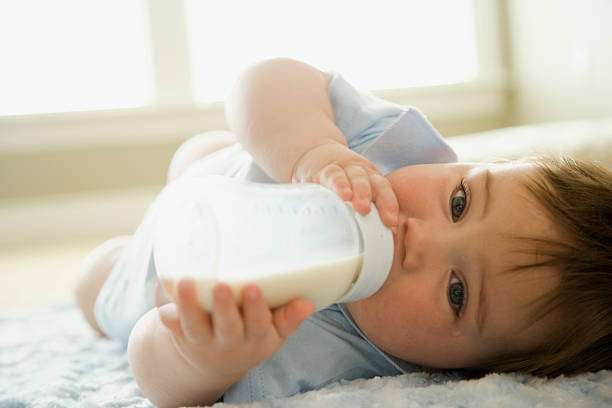
Bottle warmer emphasize “safe insulation,” but do not recommend repeated insulation.
Bottle warmer manufacturers emphasize the convenience of the keep-warm function, but they also mention in the instructions that prolonged or repeated warming is not recommended. This isn’t due to insufficient machine capacity, but rather because keep-warm is only suitable for maintaining a stable temperature for short periods, not for repeated heating and cooling cycles. Excellent bottle warmer use more precise temperature control chips to reduce temperature fluctuations and minimize cumulative damage from warming, but they cannot prevent the natural chemical and microbial changes that occur in breast milk and formula in a warm environment.
Therefore, “can keep warm” and “suitable for repeated warming” are two completely different concepts. Parents must understand the limitations of technology and avoid overusing the keep-warm function. bottle warmer
Conclusion
Three warming cycles may seem insignificant, but they can be a critical point for nutrient loss and safety hazards. From a comprehensive perspective encompassing nutritional chemistry, temperature control engineering, and microbiology, the impact of repeated warming is far greater than parents imagine. Nutrients slowly diminish due to repeated temperature fluctuations, the formula’s structure changes, bacteria proliferate rapidly in warmer environments, and the temperature control system itself cannot maintain an ideal balance indefinitely. Repeated warming is not about convenience but a habit that accumulates risks invisibly. Understanding this is crucial for bottle warmer to truly be both convenient and safe, enabling more scientific choices in childcare.