Is it better to use a portable bottle warmer or a home bottle warmer for nighttime feedings?

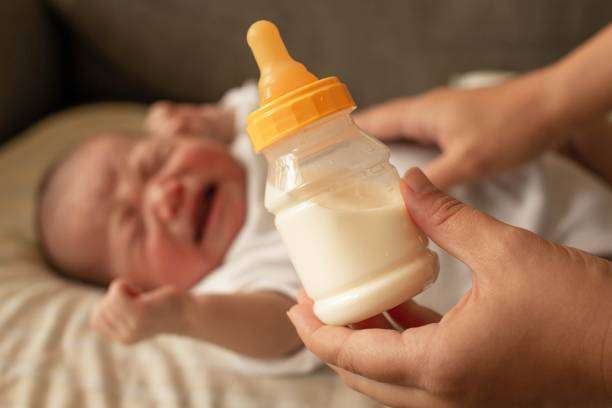
The most dreaded aspect of raising a child isn’t the busy daytime grind, but the panic of nighttime feedings.
The baby cries with hunger, and parents, half asleep and half awake, toss and turn to find the bottle, pour warm water, and test the temperature… Every nighttime feeding feels like a race against time. And at these times, a bottle warmer , which keeps the milk at just the right temperature without any hassle , is almost every parent’s lifesaver.
But the question is: Which one is better for nighttime feeding, a portable bottle warmer or a home bottle warmer ?
1. The key to nighttime feeding is not “fast” but “steady”
Many people believe that speed is key to nighttime feedings, but this isn’t entirely true. While babies cry at night because they’re hungry, what truly impacts the feeding experience is how smoothly the entire process is completed without disturbing the baby.
At this time, consistent milk temperature, ease of operation, and the ability for parents to walk less are more important than simply heating speed. In other words, the ideal state for a nighttime feeding is to be able to complete the feeding without the baby being fully awake. The choice of a bottle warmer is precisely to achieve this goal.
2. Household bottle warmer : Stable and constant temperature, suitable for families with frequent nighttime feedings
If your baby is still in the stage of needing to be fed every two or three hours at night, a bottle warmer is almost a necessity. Its core advantage is its constant temperature retention – you can prepare a bottle or warm water in advance, place it in the warmer at a constant temperature of around 40°C, and take it out directly when your baby wakes.
Why is constant temperature important? High temperatures can easily destroy the nutritional structure of formula, while low temperatures can cause bloating and indigestion. Home models utilize precise temperature control technology to maintain a temperature error within ±1°C, a feature that manual water temperature adjustment simply cannot match.
From experience, many parents will place the heater directly on the bedside table so that they can reach it at night. With the constant temperature function, there is no need to reheat it overnight, and the night feeding process can be shortened from ten minutes to two minutes.
Of course, it has real drawbacks: it’s plugged in, making it difficult to move; it’s a bit bulky, taking up space; and it can feel a bit heavy if your baby doesn’t have frequent nighttime feedings. Therefore, a home heater is more suitable for families with frequent nighttime feedings who value a stable temperature.
Portable bottle warmer : Lightweight and flexible, but requires strategic use
Portable heaters appear smarter and more technologically advanced. Their compact design often includes built-in charging, and some even display precise temperature readings. Their greatest advantage is their flexibility—they don’t need to be plugged in and can be used anywhere. They can be carried with you on trips, trips, and family visits. They can also be placed by the bed for nighttime feedings, and they operate relatively quietly.
However, many parents have discovered that the portability of portable models sometimes comes at the expense of heating speed. Due to their low power consumption, portable models often take more than five minutes to heat water from room temperature to 40°C. If the baby is already crying, the waiting time can seem particularly long.
My suggestion is to store constant-temperature water in a portable heater in advance. For nighttime feedings, you only need to mix the milk without having to heat it temporarily. This way, you can achieve both flexibility and efficiency. A portable heater is more suitable for families who don’t have many nighttime feedings, prefer simple equipment, or occasionally take their baby out.

4. Different Stages, Different Choices
Interestingly, many parents go through a phased transition:
0-6 months: Frequent nighttime feedings, so a home thermostat is recommended.
6-12 months: Fewer nighttime feedings, so a portable device is more convenient.
Travel (visiting relatives or traveling): A portable device becomes essential.
This actually shows that it’s not about who is better, but who is more suitable for you at the moment.
My experience is that the biggest fear of nighttime feedings is interruptions. Baby wakes, you’re scrambling, the milk is too hot or too cold—these little hiccups can be frustrating. The right heater can automate the entire process, creating a smoother rhythm and allowing you to regain control of your nighttime routine.
5. Extended Tips: Three Tips to Make Nighttime Feeding Easier
Prepare constant temperature water in advance : No matter what kind of heater you use, you can put water in before going to bed. The constant temperature is around 40℃, which is most convenient for making milk directly at night.
Set up a nighttime feeding corner : Reserve a small area at the head of the bed with a heater, formula, bottles, and wipes. This will reduce the number of times you need to get up, making nighttime feedings easier.
Choose an easy-to-clean model : Parents often don’t have the energy to clean complex devices after a nighttime feeding. Choosing a model that’s removable and easy to wipe down can save a lot of time.
6. Summary
a portable and home bottle warmer isn’t just about appearance or functionality; it’s about different usage habits and lifestyles.
For stability, convenience, and the convenience of frequent nighttime feedings, choose a home-use model; for flexibility, portability, and portability, choose a portable bottle warmer.
Some parents even combine the two: a home-use night watch and a portable travel watch. One set can easily cope with various scenarios.