Analysis of 3 Major Nighttime Risks of Bottle Warmer: In-Depth Safety Warnings for Long-Term Insulation

Why is “keeping warm at night” often overlooked by parents?
For families with infants, nighttime feedings are often the most exhausting. To reduce nighttime steps, many parents set their bottle warmer to keep the milk warm all night, hoping to feed the baby immediately upon waking. While seemingly convenient, this poses many hidden risks. From changes in nutrition and wear and tear on the heating system to potential safety hazards, prolonged warming not only fails to improve efficiency but may also inadvertently increase the risk of the baby ingesting spoiled milk and place an unexpected load on household appliances.
This article will systematically analyze the risks of nighttime feeding from three key perspectives and delve into the scientific mechanisms behind these issues, enabling parents to truly understand the “potential costs hidden behind convenience” and find safer alternatives for nighttime feeding.
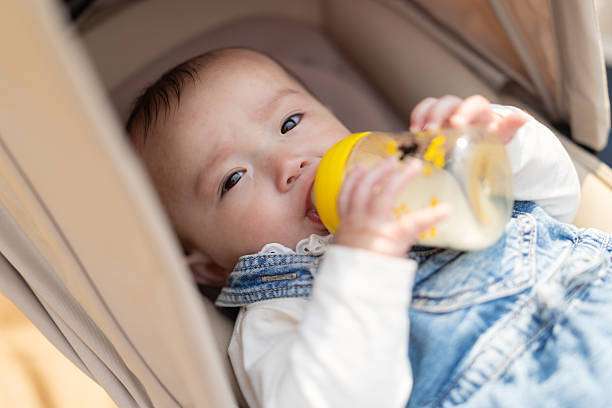
I. Prolonged Insulation and Nutritional Degradation of Milk: Silent Changes Hidden in the Night
While overnight warming may seem like simply maintaining a constant water temperature, it actually involves multiple changes in thermodynamics, microbiology, and the nutritional structure of formula milk. Many parents believe that “as long as the temperature is not high, the milk will not spoil,” but the reality is much more complex.
When a bottle warmer is in a prolonged warming state, the inner temperature typically remains around 40°C. While this temperature seems suitable for feeding, it also happens to be an active range for bacterial growth. An incompletely sealed environment or minor contamination during operation can cause a surge in microbial numbers in the milk after several hours. Even at slightly higher temperatures, this prolonged state of neither high temperature nor refrigeration accelerates changes in protein structure, causing it to transition from its natural state to a partially denatured state.
Changes in nutritional composition are not limited to protein. Vitamin C, some B vitamins, and unstable polysaccharides can degrade or oxidize after prolonged exposure to warm environments for several hours, leading to a decrease in the nutritional density of the milk. Some lipid-based formulas may also experience fat globule membrane rupture under prolonged temperature stimulation, producing tiny fat deposits that can make babies more prone to gastrointestinal discomfort.
Although these changes are imperceptible to the naked eye, they do occur every time “convenient nighttime warming” is done. Parents often feel at ease when feeding their babies in the morning, unaware that the milk entering their babies’ mouths is no longer in the nutritional form originally designed for formula.

a Bottle Warmer Due to Prolonged Insulation: Unseen “Overwork” at Night
Many bottle warmers are not designed for frequent start-stop cycles over extended periods. Nighttime warming typically means six to eight hours of continuous microcirculation heating, which is equivalent to running the device all night, even if it appears to be “doing nothing.”
In heat preservation mode, the temperature control system continuously senses the temperature and performs small-scale heating compensation. This “frequent micro-heating” places a significant burden on the temperature control device and internal heating element. Prolonged operation can slow down the response of the temperature control probe, causing the system to misjudge the temperature and resulting in a situation of “sudden overheating.”
On the other hand, metal heating surfaces subjected to prolonged constant temperature conditions will experience a slight metal fatigue effect. Although difficult to observe with the naked eye, over time, this will alter the microstructure of the metal surface, making it more prone to scale buildup or localized temperature differences.
A bottle warmer is also subjected to continuous temperature changes, especially in winter when the room temperature is low and the temperature difference is large. The cycle of contraction and expansion can cause solder joint fatigue. Many bottle warmers experience problems such as temperature control failure, temperature sensor short circuits, and sudden power outages, which are actually related to the accumulated wear and tear from long-term nighttime insulation.
More notably, some bottle warmers were not stress-tested for “12 hours of continuous operation” in their structural design. If users frequently use them for overnight warming, or even daily use, the device’s lifespan will be significantly shortened, far below the advertised lifespan.
III. Safety Hazards Arising from Nighttime Insulation: A Combination of Micro-evaporation, Precursors of Dry Burning, and Accidental Risks
The night is quiet, but the risks to the equipment are quietly accumulating. Many parents believe that “if there’s enough water, it won’t dry out.” But in reality, the biggest hidden danger of nighttime insulation is precisely because it’s too quiet and too often overlooked. bottle warmer
Water gradually evaporates under continuous low-temperature heating; even without boiling, tens of milliliters or more can be lost within hours. When the liquid level drops to a certain point, the contact area between the water and the heating surface decreases, leading to localized overheating. Some bottle warmer automatically shut off when the water level is low, but not all products have precise water level detection capabilities, and some devices rely on the user’s visual judgment of the water level. bottle warmer
Prolonged localized high temperatures can cause a sudden surge in the temperature of the metal surface, resulting in micro-deformation of plastic components or accelerated aging of sealing rings. In rare cases, if the bottle warmer uses a lower-level temperature control switch at the bottom, a phenomenon called “temperature controller contact sticking” may occur, preventing the device from shutting off power properly and creating a real safety risk.bottle warmer
In addition, higher humidity and faster air cooling at night can cause slight condensation on the exterior of the machine. When condensation gets into the circuit board or around the temperature control probe, it increases the risk of leakage, false alarms, and system crashes. Many parents assume that “it’s fine to leave the machine unattended,” but it is precisely this unattended state overnight that allows minor malfunctions to escalate into more serious safety issues.

IV. The Root of Misconceptions about Nighttime Insulation: The Psychological Illusion of Convenience
Why are so many parents willing to take the potential risks and insist on using nighttime warmers? The core reason lies in several psychological misconceptions. First, there’s the psychological need for convenience at night. A parent who wakes up in the middle of the night just wants to finish feeding as quickly as possible, so the more automated the tool, the more popular it is.
Secondly, there’s the intuitive misconception that “constant temperature equals safety.” Many people mistakenly believe that as long as the temperature doesn’t exceed the recommended values for the formula, the nutritional content won’t change, and bacteria won’t multiply. However, the insulation temperature is precisely within the range where microorganisms are most active, a crucial point that’s easily overlooked.
The third misconception is that “if the device isn’t making any noise, it means everything is working properly.” Unlike a steam boiler, a bottle warmer doesn’t make any obvious operating noise, so parents often don’t realize it’s running all night. The reassurance brought by convenience makes users overlook potential wear and tear.
These misconceptions make nighttime insulation a seemingly reasonable but actually risky practice.
V. Safer Alternatives to Nighttime Feeding: Scientific Approaches Replace Risk and Convenience
To help parents get through nighttime feedings more safely, it’s necessary to introduce more reliable methods. The safest way to feed a baby at night is to prepare warm water in advance, rather than preheating formula. Parents can fill a thermos with hot water at around 60℃ and quickly adjust it to the appropriate temperature by adding cold water at night. When the baby wakes up, it only takes a few seconds to prepare the formula, avoiding the risks of prolonged heat preservation and ensuring the formula is freshly prepared and given immediately.
Another approach is to use a bottle warmer with a “scheduled heating” function. Many newer products support timed operation, automatically heating the water to a comfortable temperature a few minutes before parents wake up, instead of keeping it warm all night. This reduces wear and tear on the device and avoids keeping the temperature in the nutritionally sensitive range for extended periods.
If parents need to feed frequently in the middle of the night, they can set the bottle warmer to a lower standby power instead of a constant temperature mode in advance so that it can heat up quickly when needed rather than keeping it warm all night.
Nighttime feeding can be challenging, but choosing a safer method is the most responsible thing to do for both the baby and the family.
Conclusion
Bottle warmer, with their ability to keep food warm overnight, seem perfectly suited to parents’ needs. However, they pose multiple risks regarding nutrition, device structure, and household electrical safety. The convenience they offer is only superficial; the hidden risks may amplify over time.
If parents understand the three key risks mentioned above, they can approach nighttime feeding more calmly and focus on truly safe and scientifically sound methods. Only with the right knowledge can nighttime feeding cease to be a “safety gamble” and become a reassuring process built on reliable choices.