
Breast milk is a baby’s most natural source of nutrition, rich in immune factors and active enzymes, essential for healthy growth. However, many parents thaw breast milk carelessly, which can lead to nutrient loss and bacterial growth. Thawing breast milk scientifically not only preserves its composition but also ensures safer and more secure feeding.
Common thawing methods
There are several common methods used at home, each with its own advantages and disadvantages:
Natural thawing : Bring the breast milk to room temperature and slowly warm it up. The advantage is that it is simple, but it takes a long time and the breast milk may be in an area where bacteria are active for a long time.
Soak in warm water : It is easy to operate, but the water temperature is difficult to control, and a slightly higher temperature may destroy immune factors.
Microwave heating : It is fast, but has a high risk of local overheating and can easily destroy nutrients, so it is not recommended.
Refrigerated transition method : highly safe, but time-consuming and inconvenient for temporary feeding.
The common problem of these methods is that it is difficult to control the temperature and heating uniformity , which is exactly the advantage of the bottle warmer .
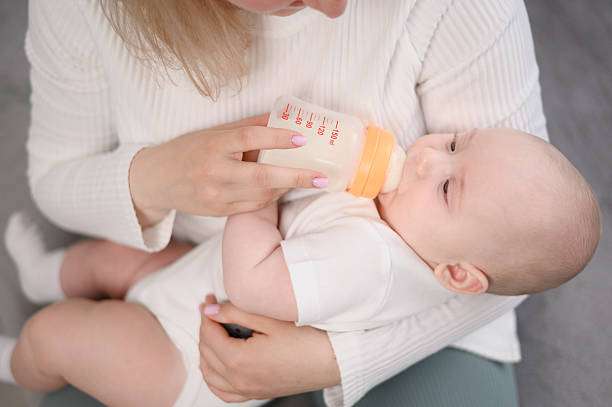
The scientific advantages of bottle warmers
It can make breast milk thawing more scientific and safer. Its core value lies in:
The temperature is controllable : it can be set to about 40℃ without destroying the immune factors.
Uniform heating : Circulating heating ensures that the temperature of the entire milk is consistent and there will be no local overheating.
Easy to operate : you can get warm and even breast milk in just a few minutes, which is especially suitable for nighttime or temporary feeding.
My own experience confirms these advantages: when my baby cries in the middle of the night, I put the refrigerated breast milk into the warmer, and in just a few minutes, it’s evenly warmed. Compared to using warm water before, it’s not only worry-free, but I don’t have to worry about the temperature being too high or too low.
Scientific Operation Guide
In order to make breast milk thawing safer, I have summarized several specific steps:
Temperature control : Place refrigerated or frozen breast milk in a heater and set it to around 40°C. After completion, you can test it with the inside of your wrist or a milk thermometer.
Heating evenly : If the device does not have a circulation function, gently rotate the bottle every 1 to 2 minutes.
Time control : Refrigerate and thaw breast milk for about 12 hours; use a bottle warmer to heat refrigerated breast milk for about 3-5 minutes. Feed immediately after heating and avoid leaving it out for more than 2 hours.
Operation hygiene : Wash hands before use, and thoroughly clean and disinfect the bottles and nipples to avoid cross contamination.

Professional advice and experience summary
Pediatricians and maternal and child care providers generally recommend:
1. Avoid using a microwave to thaw breast milk
2. Give priority to tools with controllable temperature and uniform heating.
Parents have reported that using a bottle warmer reduces the error rate, makes scientific thawing easier to adhere to, and eliminates anxiety during nighttime feedings.