bottle warmer being left unused after purchase: 3 key consumer behavior insights

From “essential need” to “unused”: The paradox of bottle warmers
Among the many categories of mother and baby products, bottle warmers are almost always among the most typical “must-buy items for new parents.” Surprisingly, many families rush to purchase them before their baby is born, even placing them prominently in their maternity bags, yet the actual frequency of use is far lower than expected.
Some families even use them only a few times before storing them away in the depths of a cupboard, never to be seen again. Why does such a highly practical, functionally defined, and seemingly essential parenting tool transform from a “necessity” into an “unused item”? What kind of gap exists between the family’s expectations when purchasing and their reality? Is it a problem with the product itself, or has the user’s mindset changed? This phenomenon reveals a deeper consumer psychology, and is not simply a matter of “laziness” or “trouble.”
Bottle warmers are easily left unused not because they are useless, but because their “usage scenarios” and “window of opportunity” are extremely short, and are influenced by multiple factors such as family parenting styles, psychological expectations, role division, and pace of life. To truly understand this phenomenon of disuse, we need to start from deeper consumer behavior, from parents’ anxieties and the gap between practicality and perceived barriers to use, and re-examine the true place of bottle warmers in family parenting.
This article will analyze three key consumer behavior insights to delve into why some families buy bottle warmers but ultimately don’t use them, revealing the gap between the psychological logic behind this shopping behavior and family reality.
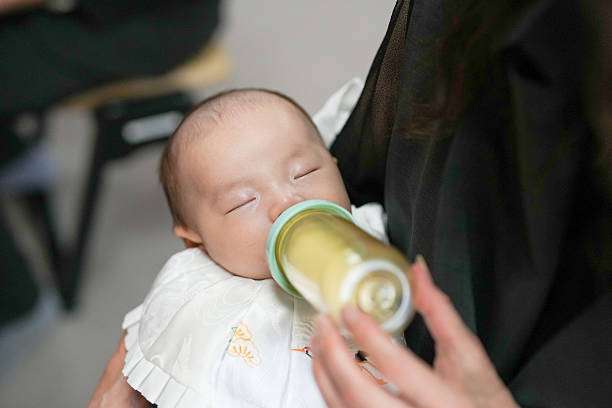
How “imaginary needs” at the time of purchase can turn bottle warmers into impulse buys
Among dozens of newborn products, bottle warmers exhibit a typical characteristic of “anticipated demand.” This means that parents purchase them based on their imagined future feeding scenarios, rather than on actual past experiences.
Lacking real-world parenting experience, expectant parents often apply an “idealized feeding method” to daily life, believing that warming the bottle for nighttime feedings will be faster, less hectic, and thus improve the caregiving experience. This imagined demand doesn’t stem from practical experience but from fear and anxiety: fear of being overwhelmed, fear of inadequate preparation, fear of the baby crying at night and their inability to react quickly. Therefore, bottle warmers are seen as a “security tool,” symbolizing a mindset of being prepared in advance, a psychological defense against the upcoming parenting challenges.
However, once the baby is born, the reality often differs from expectations. Some families find that breastfeeding reduces bottle usage significantly; others discover that preparing formula only requires hot water, and temperature control is not as difficult as imagined; still others, having become proficient at nighttime feedings, find that these processes can be easily completed without additional tools. Thus, the bottle warmer gradually transforms from a “highly necessary” necessity into a “dispensable” one.
This gap between expectations and reality reflects consumers’ over-reliance on product functionality before purchase, and also indicates that the true need for a bottle warmer does not stem from long-term use but rather from a short-term need during a “transition from novice to expert” phase.
Furthermore, marketing to mothers and babies reinforces this anticipated demand. Many advertisements emphasize “constant temperature,” “automatic,” “unattended,” and “rapid operation at night,” easily creating the illusion for expectant parents that they cannot successfully navigate parenting without a bottle warmer .
The idealized scenarios in advertising resonate with parents’ anxieties, overestimating the product’s value and thus driving purchases. Unfortunately, the advertising emphasizes psychological comfort rather than consistent usage. Once the reality of parenting doesn’t align with expectations, the perceived value of the product quickly diminishes, leading to it being left unused.
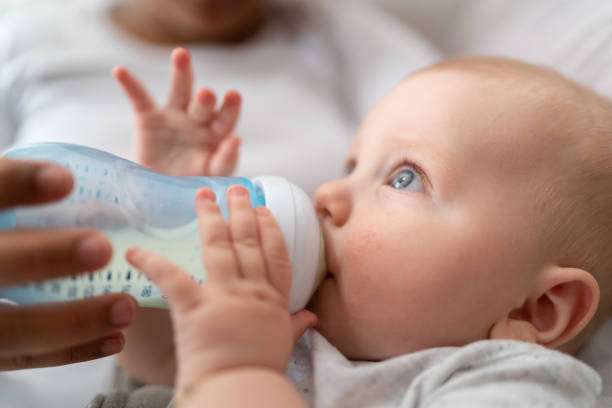
The disconnect between the user experience and family rhythm makes it difficult for the bottle warmer to integrate into daily routines.
A bottle warmer isn’t a “just-use” tool. Its operation involves adding water, placing the bottle inside, setting the temperature, waiting for it to heat up, checking the temperature again, and emptying any remaining water. While this process is theoretically highly efficient for new parents, it can clash with their daily routines during real-world nighttime feedings. Especially when the baby is crying and parents are rushing, any extra steps add stress rather than reduce the burden. When parents find that preparing formula directly with hot water or using a thermos to keep water warm is faster, they will naturally reduce their use of the bottle warmer .
This gap between reality and product expectations stems from the existence of an “operational barrier.” While bottle warmers seem simple, they require time to heat up, and time is often the most scarce resource in childcare. When a baby is crying incessantly, even a few seconds or a minute or two can feel like an eternity to parents. Consequently, many families naturally turn to more efficient alternatives. Time cost becomes the primary factor, and the product’s inherent advantages are diminished in the hectic pace of childcare.
Secondly, differences in the division of labor among family members also affect the user experience. In some families, one parent is primarily responsible for breastfeeding, while the other is not familiar with the bottle warmer . The parent on duty often chooses the most familiar and quickest method rather than preparing additional equipment. Especially when men operate a bottle warmer for the first time , they may feel intimidated by factors such as water level markings, mode selection, and temperature numbers, ultimately tending to choose a more intuitive method, such as using hot water to prepare the milk. This barrier to entry and unfamiliarity with operation makes it difficult for the bottle warmer to become the default feeding tool in the family.
Another type of family uses the product less due to changes in lifestyle. For example, as babies gradually switch to drinking warm water or eating complementary foods, the window of opportunity for bottle warmer use suddenly decreases. The product itself is not useless, but its optimal usage period is relatively short and cannot accompany a child’s growth for very long. Under this life cycle characteristic, the product gradually enters the period of idleness.

The psychological gap and decreased usage frequency create a phenomenon of “sunk cost neglect”.
bottle warmers isn’t just a functional issue; it’s also a typical consumer psychology phenomenon. When parents purchase a childcare product, they often experience three stages of psychological change: expectation, disappointment, and forgetting. Initial expectation stems from advertising, shared experiences, and personal anxiety. Mid-stage disappointment arises from the product’s discrepancy between actual experience and expectations. When they discover the product hasn’t improved childcare efficiency as expected, a sense of loss ensues. Ultimately, parents enter the forgetting stage—unwilling to admit a purchase mistake or spend time finding alternatives. Thus, the product is quietly relegated to a corner, never to be mentioned again.
This behavior is a classic example of “sunk cost ignoring.” Consumers no longer care how much they’ve already spent, nor are they willing to invest time re-evaluating the product’s value. Especially with the ever-changing pace of parenting, parents’ priorities are constantly being reordered by their baby’s needs. For them, the extra consideration of whether a device is worth continuing to use has become an unnecessary burden. Psychologically, they prefer to let the product naturally become idle rather than try to integrate it into their daily routine.
Furthermore, social media sharing exacerbates this psychological gap. Many parents, seeing others effortlessly using bottle warmers , assume their own difficulties stem from a lack of proficiency. This self-doubt creates a negative cognitive cycle, causing parents to gradually distance themselves from the product rather than actively seeking out usage methods. In the long run, the bottle warmer ‘s presence diminishes further, eventually becoming a silent item in the household inventory.
Conclusion
bottle warmers are often left unused are far more complex than they appear on the surface. They involve multiple factors, including consumer psychology, family rhythms, actual user experience, and product lifecycle. The essence is not that the product is useless, but rather that there is a mismatch between the bottle warmer ‘s practical value and the real needs of families. Understanding this phenomenon can help future parents make more rational choices about baby products and allow manufacturers to better understand user scenarios, thereby developing tools that better meet real-world needs.