Reconstructing the 3,000-Year Evolution of Bottle Warmers : 7 Major Revolutionary Milestones in Baby Feeding Tools

To many, the bottle warmer seems like a typical modern electronic product for mothers and babies, seemingly far removed from centuries of human childcare practices. However, when we extend the timeline to a longer span, the bottle warmer didn’t appear out of thin air; rather, it’s the result of the long-term evolution of infant feeding tools over thousands of years.
Its role—maintaining stable milk and food temperatures, improving feeding efficiency, and reducing the burden on caregivers—was not a modern necessity but a core survival issue in the lives of mothers and infants in ancient times. From ceramic feeding jars to glass bottles, from hot water containers to intelligent temperature control systems, humans have continuously sought safer and more convenient ways to ensure infants receive food at the appropriate temperature throughout three thousand years of infant feeding history. T
he bottle warmer is simply the latest stage in this inevitable process of change, and the seven key innovative milestones behind it constitute the main thread of the history of infant care tools.
Part One: Early Forms of Civilization: The Common Starting Point of the Need for Pottery and Warm Milk
To trace the origins of the bottle warmer , we must begin with the pottery feeding vessels of ancient civilizations. Archaeologists have discovered oddly shaped small pottery vessels in ancient Egyptian tombs, West Asian sites, and Neolithic sites in Central Europe.
These vessels, often with narrow spouts or tubular outlets, are considered the world’s earliest “baby feeding vessels.” While these pottery vessels themselves did not have heating functions, they reveal an important fact: ancient people recognized that infants needed milk or food close to body temperature and could not always rely on direct breastfeeding. Therefore, infant food at that time often needed to be warmed simply by using warm water, the residual heat of a stove, or even being held in the mother’s arms.
This rudimentary awareness of warming milk laid the cultural foundation for later heating tools. Even in some cold climates, caregivers would wrap the pottery vessels in animal hides for insulation. This method, though primitive, bears a striking resemblance to the core goal of modern bottle warmers—maintaining a stable temperature.
Part Two: The Turning Point After the Advent of Glass Baby Bottles: Safety and Temperature Control Become New Challenges
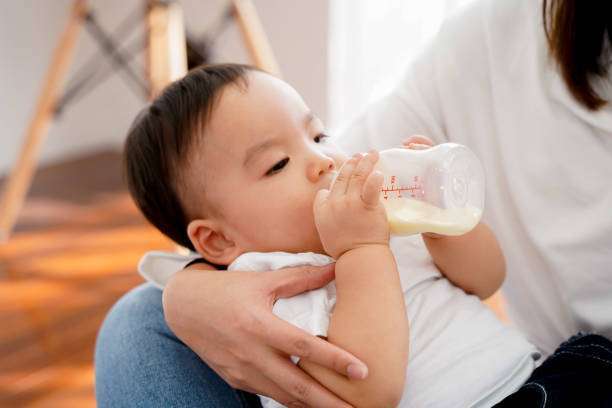
In the 19th century, industrialization led to the development of advanced glassmaking technology, enabling glass baby bottles to gradually replace ceramic and metal feeding vessels, becoming the standard tool for infant feeding. The transparency of glass allowed caregivers to observe the quantity, condition, and cleanliness of the contents; however, it also brought new challenges. Glass is susceptible to sudden temperature changes, and improper heating methods can easily cause the bottle to crack.
Furthermore, prolonged heating of glass bottles can lead to nutrient loss. Therefore, after the widespread adoption of glass baby bottles, parenting guidelines in various countries began to frequently emphasize proper heating methods. Many families adopted the hot water bath method, slowly heating the glass bottle containing milk or formula in warm water. This historical turning point made heating a crucial step in infant feeding and prompted people to consider how to make the warming process safer and more controllable, ultimately leading to the emergence of bottle heating devices.
Part Three: Popularizing Household Tool Alternatives: Kettles, Stove, and Simple Water Insulation Methods
Before the widespread use of electrical appliances, caregivers often used kettles and stoves to heat milk in a water bath. However, the problems with this method gradually became apparent. The water temperature was uncontrollable, easily leading to an overheated outer layer while the inner layer remained too cool, and even causing localized overheating that damaged nutrients.
Meanwhile, the increased focus on child safety among middle-class families following the Industrial Revolution, coupled with frequent discussions of infant mortality rates in the public health field, prompted families to gradually adopt more scientifically sound heating tools. For example, the double-layered bottle warmer appeared in the late 19th and early 20th centuries , with an outer layer containing water and an inner container for milk.
Its principle was similar to the modern bottle warmer ; although its structure was rudimentary, it already embodied the core idea of temperature control and preventing overheating. This stage laid the foundation for humanity’s basic understanding of milk warming devices: water bath, temperature control, and avoiding the risks of rapid heating.

Part Four: The Electricity and Home Appliance Revolution Drives Automation: The Prototype of the Modern Bottle Warmer Emerges
With the introduction of electricity into homes, the home appliance industry flourished, and the first plug-in bottle warmers appeared in the mid-20th century. These typically used simple heating plates that heated a water bath to raise the temperature around the bottle, avoiding uneven heating and nutrient loss that could occur with direct heating.
Although these early electric bottle warmers lacked precise temperature control systems and were relatively large and inefficient, they marked the beginning of the “automatic bottle warming” era for infant feeding. Caregivers no longer relied on stoves or kettles; electricity made the bottle warming process more standardized and facilitated a transition from traditional experience to technology-driven infant feeding. This was a major turning point in the history of the bottle warmer , making it a truly independent home appliance and opening up a commercial market.
Part Five: Breakthroughs Since the Birth of Constant Temperature Technology: Temperature Control Precision Becomes a Core Competitive Advantage
In the late 20th and early 21st centuries, temperature control technology rapidly developed in the home appliance industry. Thermostats, temperature sensors, and intelligent power-off systems began to be incorporated into bottle warmers , evolving them from simple bottle warmers into precise temperature control devices.
Scientific research has consistently shown that excessively high temperatures in infant formula not only destroy nutrients but can also cause oral burns; while excessively low temperatures affect digestion and absorption, and may even reduce infants’ acceptance. Therefore, temperature control accuracy has become a core evaluation criterion for bottle warmers .
With the application of technologies such as NTC thermistors and PID temperature control algorithms, bottle warmers have gradually achieved a stable constant temperature range of around 40℃, a temperature considered closest to that of breast milk. This technological breakthrough has transformed bottle warmers from simply “heating milk” into a standard feature of the era of scientific childcare.
Part Six: Multifunctional and Intelligent Expansion: From Single Heating to Full-Process Mother and Baby Equipment
With the popularization of smart homes and the updating of childcare concepts, bottle warmers are further developing towards multi-functionality. In addition to basic constant temperature heating, many devices are beginning to incorporate features such as defrosting modes, steam sterilization functions, nighttime feeding lights, smart app control, voice reminders, and large-capacity multi-bottle operation.
This signifies that the bottle warmer has become a multi-tasking node in the childcare ecosystem, no longer just a bottle warmer. Its core is no longer simply heating, but integrating the entire process from breast milk storage to feeding, enabling caregivers to maintain high efficiency and safety even with frequent nighttime feedings and fatigue. The addition of smart technology makes the bottle warmer a part of the home Internet of Things, improving the convenience of childcare and providing manufacturers with richer technological possibilities.
Part 7 Standardization and Specialization in the Era of Globalization: Safety Standards Drive Products into Maturity
Once bottle warmers entered the international trade system, the products began to be subject to stringent safety standards. Markets in Europe, America, Japan, and Australia imposed clear requirements on heating uniformity, material safety, electrical stability, and microbial risk control, driving the industry into a stage of standardized competition.
Many companies began to focus on details such as food-grade materials, scale buildup, leaching control, and high-temperature resistance, while ensuring through laboratory testing that each temperature mode met the safe range for infant feeding. As consumers’ awareness of product safety continued to increase, bottle warmers became more professional and standardized, gradually forming a clear set of safety boundaries. This milestone symbolizes that bottle warmers have moved from being functional devices to becoming part of public health projects; their development has transcended the home appliance industry itself, becoming an indispensable and crucial role in the infant health system.
Conclusion
From ancient pottery jars to modern smart bottle warmers , humanity’s pursuit of infant feeding tools has spanned three thousand years of history. The bottle warmer is not a sudden modern invention, but rather the product of long-term accumulated demand, continuous technological evolution, and cultural adaptation. It reflects the high importance human society places on infant safety and represents the maternal and infant industry’s continuous exploration of scientific childcare.
From the initial warm water jar to today’s intelligent temperature-controlled system, this leap is not merely a change in tools, but a profound revolution in how civilization cares for infants. The bottle warmer will continue to evolve, moving towards higher precision, greater intelligence, and greater reliability, and its place in three thousand years of feeding history will be constantly redefined with advancements in technology and concepts.