a bottle warmer—is it best to drink the milk? The temperature drop curve helps pinpoint the optimal feeding time.

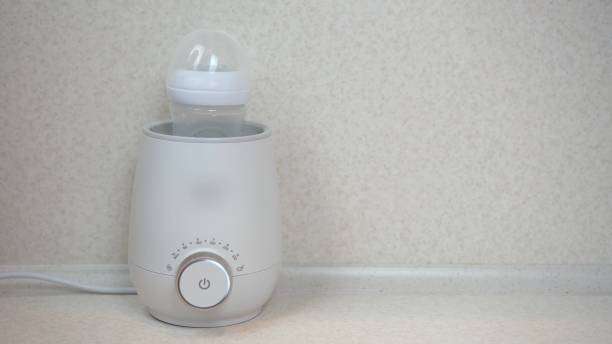
In modern parenting, bottle warmers have become almost indispensable tools for new parents. Especially at night or when babies need frequent feedings, the warmer can quickly heat the milk to the ideal temperature, making feeding efficient and controllable. However, even the most advanced equipment cannot perfectly determine when the milk is most suitable for consumption. Many parents are accustomed to feeding immediately after the machine indicates “heating complete,” but they overlook a crucial issue: the temperature of the heated milk is not yet fully uniform, which directly affects the baby’s safety and taste experience.
Understanding the temperature drop curve of breast milk is key to finding the optimal time to feed your baby. This curve describes the gradual cooling of milk after heating. It’s not a simple linear curve but rather a trend of initial rapid cooling followed by a gradual stabilization. Mastering this curve not only ensures your baby drinks at the most comfortable temperature each time but also effectively prevents the destruction of nutrients.
Heating is not the same as optimal feeding time.
Many parents start feeding their babies immediately after the bottle warmer beeps and indicates that heating is complete. While this may seem to save time, the milk’s internal temperature is actually uneven. Typically, the bottom of the bottle is slightly warmer than the center and surface, while the top is cooler. Feeding immediately in this way can cause discomfort to the baby due to localized high temperatures and may even result in scalding their mouth. Furthermore, uneven liquid temperature can lead to localized protein denaturation, affecting taste and nutrient absorption.
From a scientific perspective, milk at around 37℃ is ideal. This temperature is close to human body temperature, making it comfortable for the baby to swallow naturally and without irritating the mouth. At the same time, the active proteins and enzymes in the milk are better preserved. If the temperature is too high, it can not only make the baby uncomfortable but may also damage the nutrients; if it is too low, the feeding experience will be poor, and the baby’s sucking efficiency will decrease.
Analysis of temperature drop curve
When milk is heated to 40-42°C in the heater, it doesn’t immediately reach a uniform temperature. After being removed from the heater, the milk begins to cool naturally, with the temperature spreading outwards from the center, gradually becoming more even across the top and bottom and inside and out. The temperature drop curve shows that this process typically involves several stages: The temperature drops most rapidly in the first minute after heating ends, due to the rapid heat dissipation from the surface of the milk; then, over the next 2-3 minutes, the internal heat of the milk gradually becomes more even; after about 5 minutes, the temperature inside the bottle approaches 37°C, entering the optimal feeding range.
If left unheated, the temperature will slowly drop below 35°C, making it feel too cold, which may discourage the baby from nursing.
of multiple bottle warmers revealed that the constant temperature function is not entirely static. Traditional heaters use PTC heating or a heating plate to maintain temperature, with fluctuations typically ranging from ±2 to 3°C. Micro-circulation or intelligent constant temperature heaters, on the other hand, can control temperature fluctuations within ±1°C. This means that even if parents cannot strictly control the time, devices with constant temperature functions can maintain a comfortable milk temperature within a certain range. However, even so, waiting 2 to 5 minutes after heating is complete is still the golden period for the temperature to reach its most even state.
How to determine if milk has reached the optimal temperature
While the traditional “drip on the inside of the wrist” method is simple, its accuracy is limited. Wrist temperature perception is greatly affected by environmental factors, making it difficult to determine if the milk’s internal temperature is even. More scientific methods include using an infrared thermometer or a smart bottle with a temperature display. By measuring the temperature at the center of the bottle, it’s possible to accurately determine if the milk is within the comfortable range of around 37°C. Furthermore, shaking the milk is a necessary step. When left to stand, the upper layer of milk is cooler than the lower layer; shaking ensures a uniform temperature distribution, preventing the baby from ingesting milk at inconsistent temperatures.
Heater optimization and feeding rhythm
Once parents understand the temperature drop curve, they can optimize their feeding schedule by utilizing the features of a bottle warmer. For example, if the baby is fed every 3 hours, the heating can be started 5 minutes before the scheduled feeding. For nighttime feedings, a warmer with a constant temperature function can preheat and maintain the temperature, allowing the baby to be fed immediately upon waking without a long wait. Some high-end smart warmers can even dynamically adjust the heating time based on the milk volume and room temperature and even provide optimal feeding reminders, helping parents control the feeding time more scientifically.
The benefits of this optimization not only include keeping the milk temperature within the optimal range but also making the feeding rhythm more controllable. Parents don’t need to rush to feed, and it avoids situations where babies refuse to nurse due to frequent nighttime heating or feeding too early. A scientific feeding rhythm can also reduce parental stress and make the parenting experience smoother.

Balancing nutrition and taste
Understanding the temperature drop curve is not only about taste but also about nutrient retention. Breast milk and formula contain many heat-sensitive components, such as whey protein, lactoferrin, enzymes, and immune factors. These components may be deactivated at excessively high temperatures, affecting the baby’s absorption efficiency and immune support. By waiting for the milk to cool to around 37°C before feeding, you can preserve the milk’s nutritional activity to the greatest extent while ensuring good taste. For parents who are away for extended periods or feeding at night, properly utilizing the temperature drop curve can help avoid nutrient loss and unnecessary temperature fluctuations.
Practical Applications and Precautions
Several points should be noted during actual feeding: First, the heated milk should be gently shaken to ensure even temperature distribution. Second, even when using a thermostat heater, allow 2-5 minutes for natural rewarming to allow the temperature to drop back to the optimal range. Third, for ordinary heaters with inaccurate temperature displays, it is recommended to use infrared thermometers or a touch test, but be sure to shake well before testing the temperature to avoid localized overheating or cooling. Finally, milk should not be kept warm for extended periods. Even if the thermostat mode maintains the temperature, prolonged exposure may reduce palatability and cause micronutrients to gradually deactivate; ideally, feed the milk after 2-5 minutes.
Conclusion
Bottle warmers have greatly facilitated modern childcare, but the completion of heating doesn’t mean it’s the optimal time to feed. Understanding the temperature drop curve and mastering the transition of milk from high temperature to a balanced temperature is key to scientific feeding.
By waiting appropriately, shaking the milk well, and utilizing the constant temperature function of the bottle warmer, parents can ensure their babies drink safe, comfortable, and nutritionally complete milk. The optimal feeding time is usually 2-5 minutes after heating is complete. At this point, the milk temperature is uniform, close to body temperature, mild in taste, and well-preserved in nutrients. Mastering this golden window not only improves the baby’s feeding experience but also makes childcare easier and more organized.